
The colors of the voice have a lot to do with the vocal registers and the resonators, they also influence of course the vocal effects, the interpretation or feeling. Between these combinations and the different intensities: like volume or vocal projection, we are going to create some vocal dynamics when executing our song.
This is how we will ensure that our interpretation is not monotonous, boring or linear, creating a climax of rest, reflection, sad, exciting, etc.
A song can be interpreted in many ways, it depends on you and your technique.
To work with these colors there are several important factors, as we have already said, the main one is to recognize your own sound as such.
Can you tell a dark color from a light one?
How do you think a dark voice would be? And a clear?
Can the same note be dark or light depending on the issuer?
Let's get to know these vocal resources in relation to the vocal Registers and the Resonance cavities, while we modulate them with the different placements of the articulatory apparatus.
The "voice laryngo-resonance coupling" o “vocal placement” tries to improve the interaction between the function of the vocal cords and that of the vocal tract, thus achieving a resonant voice that is easy to produce. It is true that many traditional and other modern terms do not conform to biological realities, that is why we have to be careful not to discredit or create controversy by affirming that they are correct or incorrect, since the nomenclature and definition are in constant evolution and development. It is necessary to know how to understand the derivations or metaphors that the different teachers or vocal-coach can use to make necessary concepts understood in a more didactic way, creating concrete or abstract sensations to make the complexity of the song understood, since they are initially difficult to understand. . In this way it is possible to understand these natural phenomena in a much simpler and more intuitive way.
When we talk about vocal registers we will find several aspects that will make us recognize different placements at the physical-sensitive level where the voice or the sound, are appreciated_cc781905-5cde-3194-bb3b_concf-1586bad5 colors and shades well differentiated from each other. The vocal folds, as we already know, respond to different muscular actions caused by the articulation apparatus and it will be this, the determinant of the final result.
We recognize the voice or register of Chest for its noticeably darker and deeper coloratura, with more body and power. Its vibration can be felt by a phenomenon called "sympathetic resonance" clearly in the thorax or chest when we make low notes.
The chest is not a resonator as such, but due to the proximity effect it enters into vibration. That's where its name comes from. It is also common to refer to this register when we speak in a normal conversational tone.
We achieve that this voice has greater amplitude and sonority keeping a very low larynx, with opening of the Pharyngeal resonator and giving coverage to the sound. The vocal cords are kept together without much tension and the larynx remains at rest.
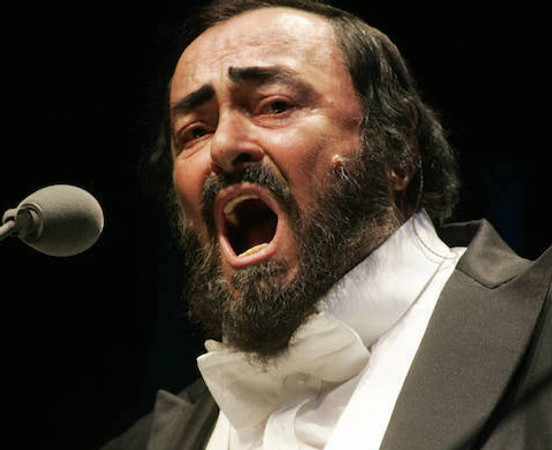
Register or head voice. The head voice is placed in a higher zone above the middle and chest voice. It supports a lower air pressure and does not allow singing with as much power as with the chest or mixed voice.
We also see fewer low or dark harmonics. It differs from the falsetto because the sound is cleaner and without air, since it is formed through a good chordal understanding * the closure of the vocal chords is complete.
It acquires the resonance of the pharynx, the nostrils and the top and front part of the head (hence its name) acquiring a bright, wide and consistent sound. This register nos helps us to expand our vocal range using the “passaggio” or mixed voice, connecting all our registers.
The head voice will help us find our mixed voice.
Of course there is a range of notes that we can sing in different registers, of which there is the dynamics of the voice. For example, the notes from F4 to D5 can be done perfectly with chest, mixed and head registers. Just as an A3 can be Chest or mixed...
This causes a lot of confusion regarding the terms, but ultimately the important thing is that you can differentiate your own sensations... that's where you start.
The Vocal Fry or Frito Vocal are some of the names by which this Vocal Register is known. We get it from a maximum relaxation of the muscles that surround the vocal cords. We start from a vibration or low note closing the vocal folds and exerting optimal pressure.
The air is pushed making the vocal chords vibrate with a sound similar to that of a hard-hinged gate. The movement of the vocal cords would be reminiscent of the mouthpiece of a balloon when it is deflating in its final phase.
More than a Vocal Register, as it is commonly known, one could say that it is a vocal effect due to the complexity of its sound and even on the other hand, “Vocal Attack”_cc781905-5cde-3194-bb3b -136bad5cf58d_since on different occasions, it helps us favoring the support of our voice.
It will be very useful for us when it comes to reaching those low notes that cost us so much, giving them a good sound and at the same time, we will learn to control and manage the air output and pressure. It is not harmful to the voice when used correctly, on the contrary since promotes the relaxation of the entire neck area.
We can find it in all kinds of musical genres. In its most primary version in Pop, Blues, Jazz, sustained long notes such as Vocal Growling or Growl... As well as in Harcore, Death Metal, Grindcore in its cruder and more forceful evolution in the form of Fry Scream, Screaming y Gutteral Voice.
It is an increasingly used register. Its use is in brushstrokes, as phrasing entries or words framed with this recurrent expression, as we said before as a vocal attack, etc.
Medium or mixed voice. This Register has a homogeneous mix with resonances from the lower and upper parts of our instrument, resolving the middle notes y acute. It usually has a brighter and sharper coloratura than the chest and a touch of nasality since it is partially projected in this area. The upper part of the normal voice is the middle voice.
A well-trained singer can stretch and narrow his vocal folds while maintaining a balanced timbre and connected register effortlessly, since he has the necessary coordination to apply continuous adjustments between air pressure, vocal fold tension, and resistance to movement. said pressure.
In addition, this voice deserves to be classified separately because of the clear sensation of resonance in the mask, that is, in the resonators of the face.
The well-known “Falsete or falsetto” is recognizable because it has no power, but it is against its very sweet and light sound. As its name indicates, it reminds us of a false or distorted voice. It usually has a very airy or blown calyx and is a widely used resource to embellish the melodic lines creating another vocal texture.
It is not possible to sing very long lines in this modality or for a long time, since expelling so much air is exhausting for the singer.
It is characterized by the fact that we would be working in a high or acute vocal range and that is why it is a resource or vocal quality, widely used by men due to their natural difficulty in reaching such high notes with a good placement or projection.
Note: Do not confuse with airy voice, Breathy voice or blown voice.
How to do a falsetto? It simply recreates a very sharp and high-pitched voice simulating a cartoon doll, guoooouuuuuu!!
Whistle register, the "Whistle" or "Tiple" voice are some of the names by which the voice or the execution process is known to achieve the highest and highest notes that can be produce vocally.
Fourth position is considered. More than a voice, it is a sound since it cannot be articulated in words.
It is produced by a maximum stretching of the perfectly closed strings and a very small opening through which the air will pass with a very fair pressure, equaling the sound of a balloon when we stretch its mouthpiece or the lip whistle itself.

This record is classified from E6 to the Guinness Record - G10 that was made by Georgia Brown, a singer known for her enormous vocal record , the largest in the world known to date: exactly 8_cc781905-5cde -3194-bb3b-136bad5cf58d_ octaves , from a G2 to a G10.
Request the password from your Professor@ or Vocal Coach
The Passage or Passaggio of the voice, is the area of the tessitura in which the singer notices a change in the position of the sound; as another sensation in the vocal emission, and even as if it were not his voice. The zone of notes where the change from one register to another occurs, would be this conflictive zone of the singer and which, of course, varies from one singer to another. To take into account - Not all singers have difficulty in this area.

So that our passing notes in this delicate area are not too noticeable and do not cause us roosters in register changes (or sudden changes in the sound of our voice), we have different formulas, techniques and exercises that we can use, but first it is It is advisable to understand what is happening with our instrument.
Where does this change occur?
This change is closely related to the vocal cords and the tension exerted on the muscles of the larynx. As we already know, the way sound is produced is through closed strings. Thus, when we perform a chordal closure, this can be done in different ways, managing to vary the height, timbre and color of our voice.
The chordal closure is completely variable. By activating it correctly, you will gain expression and dynamics and you will be able to connect your vocal registers, reaching your maximum notes in both directions. When the chordal closure is soft without much force, it will give a feeling of lightness and smoothness, even the sound of the air will be noticed. The falsetto is a sound that we get by working on a soft chordal closure in the head register.
A good exercise to start working from scratch and eliminate tensions is to practice from the lip trill or the Fry vowel. When we do the vocal Fry our strings are closed and relaxed.
Go to lesson 5 to learn more about how the vocal cords and throat muscles are working